Unholy Metamorphosis
Steven ParkerFebruary 17, 2026 · 12 min read
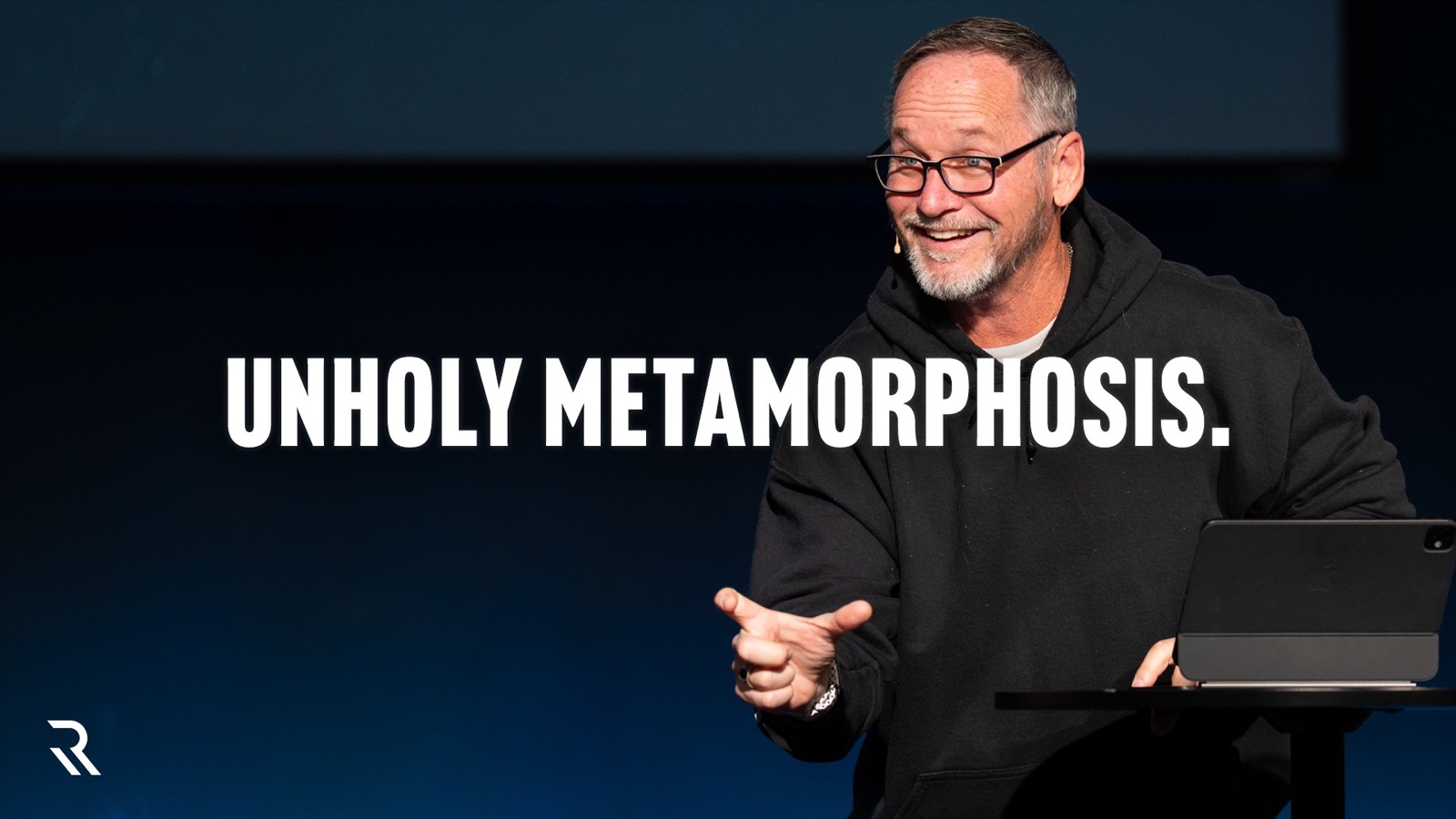
The Crisis of Unholy Metamorphosis: When Compromise Becomes the New Normal
There's a profound crisis unfolding within the body of Christ today. It's subtle, gradual, and often unnoticed until we find ourselves far from where we started. This crisis has a name: Unholy Metamorphosis.
Unholy Metamorphosis is what happens when what was once a certainty without argument gives way to what is sinful so slowly that it becomes the new normal and acceptable to us. It's the spiritual equivalent of a frog in slowly boiling water, unaware of the danger until it's too late.
The Single Message for All
The message of God doesn't come in denominational flavors. There isn't a Baptist version, a Catholic version, a Pentecostal version, or a non-denominational version. God has one singular message for anyone who will hear and obey. Not just hear, but obey.
Whatever our background, it becomes irrelevant when we truly encounter the living God. What matters is what's in our foreground: where He is leading us and our willingness to follow, regardless of what that looks like or what we must leave behind.
The constant battle we face isn't against flesh and blood, but against the creeping acceptance of what God never sanctioned. It's a determination to stand against anything that would supplant the genuine work of God in our lives with a counterfeit, no matter how appealing, how culturally acceptable, or how easy it might make our journey.
The Danger of Unauthorized Fire
In Leviticus 10, we encounter a sobering account. Nadab and Abihu, sons of Aaron and the first priests of Israel, offered unauthorized fire before the Lord, fire which He had not commanded them. The result was immediate and fatal: fire came out from before the Lord and consumed them.
Moses then conveyed God's message to Aaron: *"*Among those who are near me, I will be sanctified, and before all the people, I will be glorified."
These first two priests failed because they offered what was not asked. They entered a place they were not invited to at the wrong time. They operated under the assumption that if they thought it was okay, God would think it was okay too.
God's response was unequivocal: "I will be sanctified." Not might be. Not possibly. I will be.
The Specific Way
Following this tragedy, God gave Aaron detailed instructions about how to enter the holy place: "But in this way Aaron shall come into the holy place." Four critical words: "in this way."
There was no option, no alternative path, no room for creative interpretation. The instructions were specific: a bull from the herd for a sin offering, a ram for a burnt offering, holy linen garments, ritual bathing, every detail mattered.
God wasn't being difficult or arbitrary. He was establishing a principle that echoes throughout Scripture: there is a way to approach Him, and that way is defined by Him, not by our preferences, convenience, or contemporary cultural norms.
The Tale of Two Goats
The Day of Atonement ritual in Leviticus 16 reveals something profound about sin and redemption. Two goats were selected, one to be sacrificed for the sins of the people, and another to be sent alive into the wilderness.
The first goat was offered for the known sins, the temple, the priests, the people. But the second goat, the scapegoat, served a different purpose. Aaron would lay both hands on its head and confess over it all the iniquities, transgressions, and sins of Israel. Then this goat would be sent away into the wilderness of Azazel, carrying the sins far from the people.
One goat died for sins that were known. The other was sent away alive to carry every sin that might ever be committed, because the true Redeemer had not yet given His life.
This is where we get the concept of the scapegoat. But here's the crisis: within the body of Christ today, we've invited the goat into our pasture. We allow it to remain, to stay, and we keep casting our sins onto it repeatedly, convincing ourselves that repetition makes something acceptable over time.
Sheep and Goats: An Eternal Distinction
In Matthew 25, Jesus describes the final judgment: "When the Son of Man comes in His glory and all the angels with Him, He will sit on His glorious throne, and all the nations will be gathered before Him. He will separate the people one from another as a shepherd separates the sheep from the goats."
A goat can never be a sheep, no matter how many times it tries. It can sound like one, act like one, try to mimic one, but it will never be a sheep. The distinction isn't about the inherent value of goats versus sheep; both were created by God and serve purposes. The distinction is about nature, calling, and alignment with God's purpose.
The sheep on His right hear: "Come, you who are blessed by my Father, take your inheritance, the kingdom prepared for you since the creation of the world."
Why? Because they fed the hungry, gave drink to the thirsty, welcomed strangers, clothed the naked, cared for the sick, and visited prisoners. Not to earn salvation, but because their transformed nature produced transformed actions.
The goats on His left hear: "Depart from me, you who are cursed, into eternal fire prepared for the devil and his angels."
They believed everything was right. They believed everything was good. But their belief didn't align with God's truth.
The Cost of Compromise
Here's the uncomfortable truth: you can feed all the hungry people you want and still go to hell. You can read your Bible ten hours a day and still be lost. These actions don't define whether we're right with God. They're the result of being right with God.
What defines whether we're sheep in His pasture is whether we're saying to the Father: "Whatever is in me that is not aligned with You, separate me from it today."
Unholy Metamorphosis happens when we change our beliefs to accommodate our choices rather than changing our choices to accommodate God's purpose. We'd rather say, "I'm going to do this and ask You to bless it," than ask, "What would You have me do that You bless without me asking?"
The Path to Redemption
God doesn't hate the sinner, whether homosexual, alcoholic, adulterer, drug addict, fornicator, or any other category of brokenness. He hates the sin. But the person that sin is occupying? He's looking for a way to redeem them every single time.
Redemption cannot come where truth is not present. We must be willing to call sin what it is, not to condemn but to create space for genuine transformation.
When someone comes to God in genuine repentance, He never says, "I don't have time today." He never pulls out a tally sheet to determine worthiness. He never counts how many times we've denied Him or allowed counterfeits into our lives.
What He says is: "You came to Me to repent. You came to receive My Son, whom I sent to change your life. Repentance just came to you. Forgiveness just came to you."
The Call to Realignment
If any change in our life is not led by the Holy Spirit and does not align with Scripture, a dangerous metamorphosis will occur. Holy Spirit serves as our teacher, comforter, and the One who convicts us of sin, righteousness, and judgment.
This conviction isn't shame, it's opportunity. It's a calling out to be redeemed, to recognize what we didn't see before, and to respond to the invitation: "Come to Me and repent."
The question we must ask ourselves is simple: Have we allowed an Unholy Metamorphosis to take root in our lives? Have we begun to accept things God would never accept? Have we made what was once clearly wrong into something we now call right?
The Father is calling for a regrouping, a reconnection, a getting-it-right moment. There is one way, and it is through Jesus Christ. It is by allowing Holy Spirit to work in our lives, to convict us, to teach us, to transform us.
Just because something becomes our new truth will never make it God's truth. The invitation today is to come into alignment with His Word, to allow Him to transform what's out of place, and to experience the complete renewal that only He can bring.
The choice is ours: remain in the land of Azazel with our sins, or find ourselves at the feet of the Father, transformed by His grace and aligned with His purpose.
[Section 1] label="Main" scheme=0
Unholy Metamorphosis
The Crisis of Unholy Metamorphosis: When Compromise Becomes the New Normal
There's a profound crisis unfolding within the body of Christ today. It's subtle, gradual, and often unnoticed until we find ourselves far from where we started. This crisis has a name: Unholy Metamorphosis.
Unholy Metamorphosis is what happens when what was once a certainty without argument gives way to what is sinful so slowly that it becomes the new normal and acceptable to us. It's the spiritual equivalent of a frog in slowly boiling water, unaware of the danger until it's too late.
The Single Message for All
The message of God doesn't come in denominational flavors. There isn't a Baptist version, a Catholic version, a Pentecostal version, or a non-denominational version. God has one singular message for anyone who will hear and obey. Not just hear, but obey.
Whatever our background, it becomes irrelevant when we truly encounter the living God. What matters is what's in our foreground: where He is leading us and our willingness to follow, regardless of what that looks like or what we must leave behind.
The constant battle we face isn't against flesh and blood, but against the creeping acceptance of what God never sanctioned. It's a determination to stand against anything that would supplant the genuine work of God in our lives with a counterfeit, no matter how appealing, how culturally acceptable, or how easy it might make our journey.
The Danger of Unauthorized Fire
In Leviticus 10, we encounter a sobering account. Nadab and Abihu, sons of Aaron and the first priests of Israel, offered unauthorized fire before the Lord, fire which He had not commanded them. The result was immediate and fatal: fire came out from before the Lord and consumed them.
Moses then conveyed God's message to Aaron: *"*Among those who are near me, I will be sanctified, and before all the people, I will be glorified."
These first two priests failed because they offered what was not asked. They entered a place they were not invited to at the wrong time. They operated under the assumption that if they thought it was okay, God would think it was okay too.
God's response was unequivocal: "I will be sanctified." Not might be. Not possibly. I will be.
The Specific Way
Following this tragedy, God gave Aaron detailed instructions about how to enter the holy place: "But in this way Aaron shall come into the holy place." Four critical words: "in this way."
There was no option, no alternative path, no room for creative interpretation. The instructions were specific: a bull from the herd for a sin offering, a ram for a burnt offering, holy linen garments, ritual bathing, every detail mattered.
God wasn't being difficult or arbitrary. He was establishing a principle that echoes throughout Scripture: there is a way to approach Him, and that way is defined by Him, not by our preferences, convenience, or contemporary cultural norms.
The Tale of Two Goats
The Day of Atonement ritual in Leviticus 16 reveals something profound about sin and redemption. Two goats were selected, one to be sacrificed for the sins of the people, and another to be sent alive into the wilderness.
The first goat was offered for the known sins, the temple, the priests, the people. But the second goat, the scapegoat, served a different purpose. Aaron would lay both hands on its head and confess over it all the iniquities, transgressions, and sins of Israel. Then this goat would be sent away into the wilderness of Azazel, carrying the sins far from the people.
One goat died for sins that were known. The other was sent away alive to carry every sin that might ever be committed, because the true Redeemer had not yet given His life.
This is where we get the concept of the scapegoat. But here's the crisis: within the body of Christ today, we've invited the goat into our pasture. We allow it to remain, to stay, and we keep casting our sins onto it repeatedly, convincing ourselves that repetition makes something acceptable over time.
Sheep and Goats: An Eternal Distinction
In Matthew 25, Jesus describes the final judgment: "When the Son of Man comes in His glory and all the angels with Him, He will sit on His glorious throne, and all the nations will be gathered before Him. He will separate the people one from another as a shepherd separates the sheep from the goats."
A goat can never be a sheep, no matter how many times it tries. It can sound like one, act like one, try to mimic one, but it will never be a sheep. The distinction isn't about the inherent value of goats versus sheep; both were created by God and serve purposes. The distinction is about nature, calling, and alignment with God's purpose.
The sheep on His right hear: "Come, you who are blessed by my Father, take your inheritance, the kingdom prepared for you since the creation of the world."
Why? Because they fed the hungry, gave drink to the thirsty, welcomed strangers, clothed the naked, cared for the sick, and visited prisoners. Not to earn salvation, but because their transformed nature produced transformed actions.
The goats on His left hear: "Depart from me, you who are cursed, into eternal fire prepared for the devil and his angels."
They believed everything was right. They believed everything was good. But their belief didn't align with God's truth.
The Cost of Compromise
Here's the uncomfortable truth: you can feed all the hungry people you want and still go to hell. You can read your Bible ten hours a day and still be lost. These actions don't define whether we're right with God. They're the result of being right with God.
What defines whether we're sheep in His pasture is whether we're saying to the Father: "Whatever is in me that is not aligned with You, separate me from it today."
Unholy Metamorphosis happens when we change our beliefs to accommodate our choices rather than changing our choices to accommodate God's purpose. We'd rather say, "I'm going to do this and ask You to bless it," than ask, "What would You have me do that You bless without me asking?"
The Path to Redemption
God doesn't hate the sinner, whether homosexual, alcoholic, adulterer, drug addict, fornicator, or any other category of brokenness. He hates the sin. But the person that sin is occupying? He's looking for a way to redeem them every single time.
Redemption cannot come where truth is not present. We must be willing to call sin what it is, not to condemn but to create space for genuine transformation.
When someone comes to God in genuine repentance, He never says, "I don't have time today." He never pulls out a tally sheet to determine worthiness. He never counts how many times we've denied Him or allowed counterfeits into our lives.
What He says is: "You came to Me to repent. You came to receive My Son, whom I sent to change your life. Repentance just came to you. Forgiveness just came to you."
The Call to Realignment
If any change in our life is not led by the Holy Spirit and does not align with Scripture, a dangerous metamorphosis will occur. Holy Spirit serves as our teacher, comforter, and the One who convicts us of sin, righteousness, and judgment.
This conviction isn't shame, it's opportunity. It's a calling out to be redeemed, to recognize what we didn't see before, and to respond to the invitation: "Come to Me and repent."
The question we must ask ourselves is simple: Have we allowed an Unholy Metamorphosis to take root in our lives? Have we begun to accept things God would never accept? Have we made what was once clearly wrong into something we now call right?
The Father is calling for a regrouping, a reconnection, a getting-it-right moment. There is one way, and it is through Jesus Christ. It is by allowing Holy Spirit to work in our lives, to convict us, to teach us, to transform us.
Just because something becomes our new truth will never make it God's truth. The invitation today is to come into alignment with His Word, to allow Him to transform what's out of place, and to experience the complete renewal that only He can bring.
The choice is ours: remain in the land of Azazel with our sins, or find ourselves at the feet of the Father, transformed by His grace and aligned with His purpose.
Written by
Steven Parker
Founding Pastor
Steven and his wife Kimberly started The Rock in 1999. He writes a Deep Dive alongside most Sunday messages.
Messages by Steven